
Insights · 18 September 2026
Miwani Janja featured in The Citizen.
A national spotlight on our prototype journey, why access to information matters, and the work required to move carefully toward production.
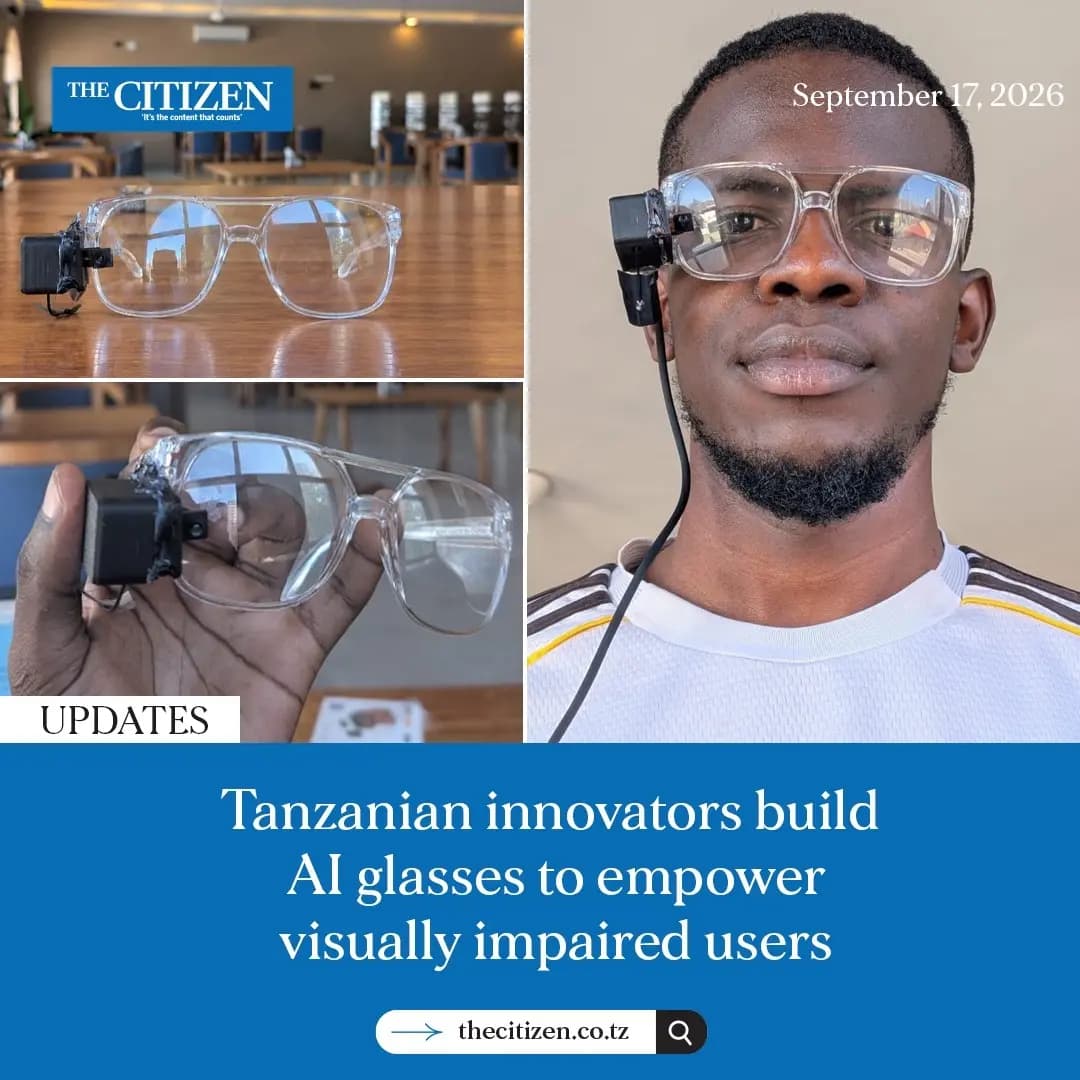
National coverage
Our work has reached a wider Tanzanian audience.
The Citizen featured Miwani Janja in its report on Tanzanian innovators developing AI-powered smart glasses for people with visual impairments. The feature introduced our team, the problem that shaped the idea, the progress of our prototypes, and our preparation for the next stage of development.
We value the recognition because it brings more people into an important conversation: everyday information should be accessible without forcing someone to wait for help or surrender their privacy.
Why we started
The idea grew from years of seeing information barriers up close.
As shared with The Citizen, the idea was influenced by the experience of a co-founder who studied alongside blind students for seven years. That experience made the difficulty of accessing books and other printed information impossible to ignore.
Miwani Janja is being designed to use artificial intelligence to interpret useful visual information and communicate it through audio. The goal is practical: help blind people read documents, recognise nearby objects, and understand their surroundings with greater independence.
Information becomes more useful when it can be accessed privately, clearly, and at the moment it is needed.
Prototype progress
From a first prototype in 2025 to preparation for production.
The report follows our progress from the first prototype developed in 2025 to the second prototype released in 2026. The product remains at the prototype stage and has not yet been sold or distributed. Our current focus is refinement, testing, and preparation for responsible production.
We are working with a manufacturing partner and exploring the technical and operational steps required to move from a working prototype to a dependable product. The current target discussed in the feature is a market entry around March 2027, subject to successful development, testing, and production readiness.
Access and partnership
Building the technology is only part of the challenge.
The Citizen also reported an expected price range under consideration of USD 200–300. That is a development target rather than a final retail price. We are exploring partnerships that can improve access while the product and its production model continue to evolve.
Collaboration with blind communities, accelerators, non-governmental organisations, development organisations, technical partners, and investors will be important. Each can help us test more responsibly, strengthen the product, and understand what affordability should look like in the communities we hope to serve.
What comes next
Recognition is a milestone, not the finish line.
Our next steps remain focused on product refinement, meaningful user testing, manufacturing preparation, and strong partnerships. We will keep listening to blind people and the organisations that work alongside them as we improve both the technology and the way it reaches users.
We are grateful to The Citizen for documenting this stage of the journey. We will continue building from Tanzania with the ambition to serve blind communities across Africa—carefully, transparently, and one useful iteration at a time.
Continue the story